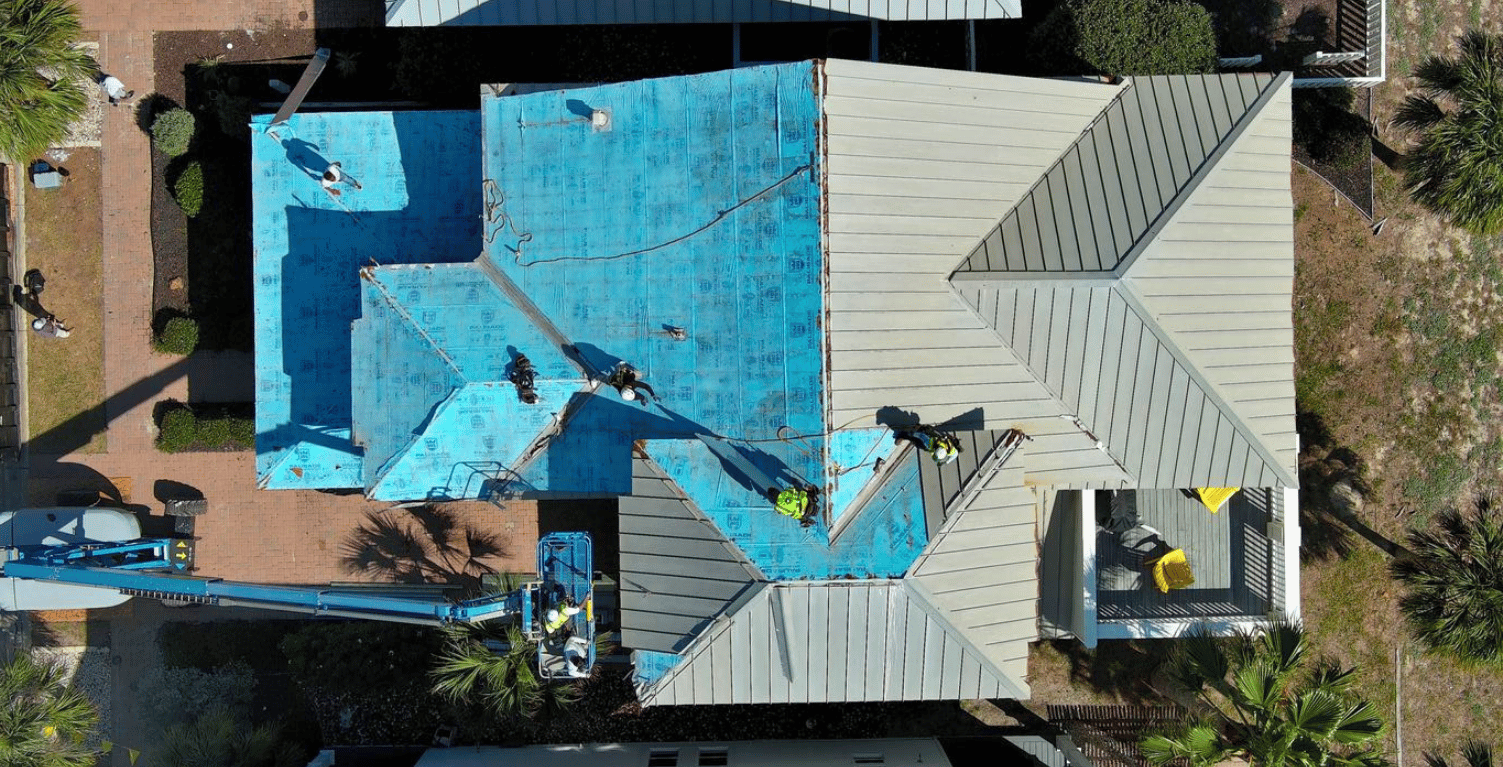
How Texas Heat Damages Your Roof Over Time
As homeowners, we often connect roofing damage to singular events, like hailstorms or high winds. Unfortunately, heat damage rarely comes to mind, even though it can be just as destructive over time. That is because the gradual nature of the damage can be easy to overlook until warning signs have passed the point of no return. To help you stay ahead of Texas heat roof damage, let us explain why it is so powerful, what to look for, and how you can combat it.
Why Texas Heat is So Hard on Roofing Materials
We know how hot it gets in Texas, but the air temperature outside is just part of the story. When estimating how hot the shingles on the roof actually get, you can add 30°F to 50°F to the ambient air temperature on a clear day. Therefore, if it is a sunny day at 90°F–95°F, an asphalt shingle’s temperature can reach 150°F to 160°F.
That heat is incredibly damaging as is, but that isn’t all. It is also damaging when it cools back down. This is called thermal cycling: the constant expansion and contraction of roofing materials throughout the day. At night, the temperature outside cools, bringing the roof temperature down to possibly 90°F, before rising again to 160°F at the hottest part of the day. That is a 70°F daily temperature swing.
Unfortunately, the different materials of your roof all transmit heat at a slightly different rate, which means these components are constantly straining against one another. In reality, that looks like adhesive seals loosening, nails slowly being pulled up, gaps opening at flashing points, and cracks in the shingles’ body. Eventually, that damage will become visible.
Common Signs of Texas Heat Roof Damage
While it may take some time to present, Texas heat roof damage can become visible to the untrained eye. Often this looks like:
- Curling, cracking, or brittle shingles
- Granule loss or bald spots on shingles
- Faded or discolored roofing materials
- Dried, cracked, or separated sealant around vents and flashing
- Warped flashing or lifted edges
- Interior water stains or attic moisture after rain
Unfortunately, by the time that leaks start to appear, the roof may have been weakening for months or years.
Preventing Texas Heat Roof Damage with Routine Maintenance
Fortunately, there is a way to prevent Texas heat roof damage: routine maintenance. This looks like:
- Getting annual inspections from certified roofers
- Repairing cracked sealant and flashing early
- Replacing damaged shingles promptly
- Consistently checking attic ventilation
As a homeowner, this also means keeping your gutters and rooftop clear of debris and natural growths.
How Precision Roofing Works Roof Protection Plans Help
At Precision Roofing Works, we understand how roof maintenance can be easy to forget. Homeowners lead busy lives, and time can slip away before you realize what’s happening. That is why we offer our Protection Plans. We offer peace of mind by ensuring your roof is regularly inspected, maintained, and covered under priority service.
With these plans, you’re maximizing the value of services and gaining access to exclusive discounts on future roofing work. If you would like to get protected, save money, and keep your roof healthy for years to come, please contact us for a free assessment.